


Chronoswiss Watch Repair – Fix Broken Chronoswiss
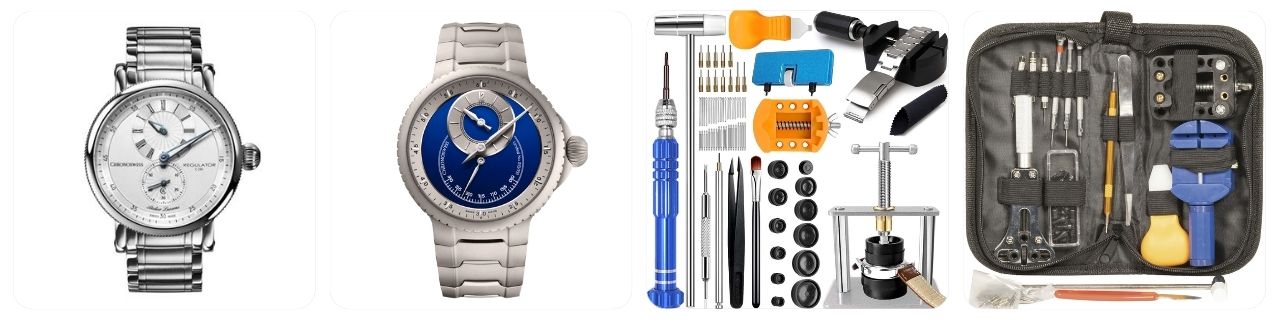
A broken Chronoswiss can be a little intimidating because these aren’t simple mass-market watches. Many models use complicated mechanical movements, regulator displays, jumping-hour systems, chronographs, and highly finished components. The good news is that problems such as poor accuracy, short power reserve, damaged crowns, and worn seals can often be repaired. Here’s what to check, what repairs may cost, and where to get proper Chronoswiss service.
What are you looking for?
- Chronoswiss Watch Fix Common Issues
- Chronoswiss Watch Repair Cost
- Chronoswiss Service Center Near Me Finder
- Buy Broken Chronoswiss Watch
- Broken Chronoswiss Watch FAQ
Broken Chronoswiss Watch? Fix Common Chronoswiss Watch Problems and Issues
Chronoswiss automatic watch keeps stopping: If your Chronoswiss stops shortly after being removed from your wrist, start by manually winding it through the crown and then check the running time. A noticeably short power reserve can indicate dried lubricants, mainspring wear, a winding-system fault, or movement damage. Complicated Chronoswiss movements are best diagnosed by a certified watchmaker rather than opened at home.
Chronoswiss watch is running unusually fast or slow: A sudden accuracy change can come from magnetization, impact damage, lubrication problems, or movement components drifting out of adjustment. You can check for magnetization with a watch demagnetizer, but substantial timing errors on an expensive Chronoswiss should be measured professionally on a timing machine before anyone starts adjusting the movement.
Chronoswiss regulator display is not lining up correctly: Chronoswiss is particularly famous for regulator-style watches where the hours, minutes, and seconds may use separate displays. If one indication becomes misaligned, jumps incorrectly, or stops while the others continue, the issue can involve the hand fitting or underlying gear train. Avoid repositioning the hands yourself because these specialized displays require careful synchronization.
Chronoswiss crown is difficult to wind or set: Stop if the crown suddenly becomes stiff, gritty, or unusually loose. Chronoswiss watches often use distinctive onion-style crowns, and damage can involve the crown itself, stem, winding pinion, sliding pinion, or keyless works. Forcing the crown can make the repair considerably more expensive. Have it inspected before continuing to wind or set the watch.
Chronoswiss chronograph will not start or reset: A malfunctioning chronograph on models such as the Chronoscope or other Chronoswiss chronographs can involve the pushers, reset mechanism, clutch, cams, wheels, or movement adjustment. If a pusher feels unusually hard, don’t force it repeatedly. Professional servicing is usually the right approach because chronograph movements contain many interacting parts that must be precisely adjusted.

JOREST Watch Repair Kit for Battery Replacement & Link Removal, Resizing &Opener, Watch Repair and Cleaning Screwdriver Set, Wrench Back Remover, Spring Bar Tool

Watch Link Removal Kit, BYNIIUR Watch Repair Kit, Watch Case Opener Spring Bar Tools, Watch Battery Replacement Tool Kit, Watch Band Link Pin Tool Set with Carrying Case and Instruction Manual

JOREST Watch Battery Replacement Kit, Watch Repair Screwdriver, Watch Band Replacement tool, Watch Wrench Back Remover, Watch Case Opener, Watch Back Remover Holder, Spring bar, Tweezers
Chronoswiss watch has moisture or fog under the crystal: Condensation inside a Chronoswiss should be treated as an urgent repair. Moisture can stain a handcrafted dial, corrode movement components, damage hands, and destroy lubricants. Keep the crown closed, avoid operating any pushers, and arrange service quickly. The watch should be dried, inspected internally, fitted with suitable seals, and pressure-tested before being worn around water again.
Chronoswiss sapphire crystal is chipped or cracked: Sapphire is highly scratch resistant, but a sharp impact can still chip or crack it. Because many Chronoswiss models have complicated case and dial architecture, the replacement crystal must have the correct dimensions, profile, coatings, and gasket arrangement. Avoid generic crystals on valuable models, especially if maintaining originality and water resistance matters to you.
Chronoswiss date or calendar display is stuck: Calendar complications can become damaged if the date is manually changed while the mechanism is already engaged around midnight. If your Chronoswiss date sticks, advances halfway, skips, or no longer changes automatically, stop repeatedly cycling it. A watchmaker may need to inspect the date wheel, jumper, corrector mechanism, gears, and related components.
Chronoswiss strap, buckle, or spring bar is damaged: A worn leather strap or failed spring bar is one of the easier Chronoswiss problems to fix. Carefully measure the lug width and verify the original buckle size before buying replacements. A spring bar tool kit can help with strap changes, but tape the lugs first to reduce accidental scratches.
Chronoswiss watch makes an unusual rattling noise: Some rotor noise is normal in an automatic watch, but a new metallic rattle after a drop or hard knock can indicate a loose rotor, screw, movement clamp, or damaged automatic winding component. Stop wearing the watch if the sound is noticeably different from normal. Loose metal parts can cause additional movement damage while the watch continues running.
How much does a Chronoswiss watch repair and maintenance cost?
Chronoswiss does not treat every watch as a one-price repair. Its official service process begins with a diagnostic evaluation followed by a tailored cost estimate, and service only proceeds after the owner approves the quotation. Complex movements, older references, rare components, dial damage, and case restoration can push the final bill considerably higher. The estimates below are general U.S. dollar ranges rather than guaranteed Chronoswiss prices.
- Basic diagnosis and regulation: Approximately $100 – $250 for inspection, timing-machine testing, regulation, and basic functional checks on a Chronoswiss movement.
- Water-resistance service: Approximately $150 – $350 for gasket replacement, crown inspection, case sealing, pressure testing, and related minor work.
- Standard automatic movement service: Approximately $600 – $1,000 for disassembly, cleaning, lubrication, adjustment, reassembly, testing, and replacement of routine movement components.
- Chronoswiss regulator movement service: Approximately $700 – $1,200 depending on caliber complexity, condition, regulator mechanism, parts requirements, and final adjustment.
- Chronograph complete service: Approximately $900 – $1,600+ because chronograph movements require additional disassembly, synchronization, regulation, testing, and specialized labor.
- Complicated movement repair: Approximately $1,000 – $2,500+ for jumping-hour, retrograde, skeletonized, tourbillon, or similarly complex Chronoswiss mechanisms.
- Sapphire crystal replacement: Approximately $300 – $800+ depending on crystal dimensions, coating, case architecture, seals, and availability of original components.
- Crown, stem, or winding repair: Approximately $250 – $700 depending on whether the distinctive Chronoswiss crown, stem, tube, or internal winding components require replacement.
- Dial or hand restoration: Approximately $400 – $1,500+ depending on damage, dial construction, guilloché or enamel work, replacement availability, and restoration complexity.
- Water-damage restoration: Approximately $1,000 – $3,000+ if corrosion affects the movement, hands, dial, crown, seals, case components, or complicated mechanisms.
Because Chronoswiss produces luxury mechanical watches with specialized components, the replacement of a dial, case part, crown, movement bridge, module, or other proprietary component may add substantially to the estimate. Vintage watches can also be different because some original parts may no longer be readily available.
JOREST Watch Repair Kit for Battery Replacement & Link Removal, Resizing &Opener, Watch Repair and Cleaning Screwdriver Set, Wrench Back Remover, Spring Bar Tool
Watch Link Removal Kit, BYNIIUR Watch Repair Kit, Watch Case Opener Spring Bar Tools, Watch Battery Replacement Tool Kit, Watch Band Link Pin Tool Set with Carrying Case and Instruction Manual
JOREST Watch Battery Replacement Kit, Watch Repair Screwdriver, Watch Band Replacement tool, Watch Wrench Back Remover, Watch Case Opener, Watch Back Remover Holder, Spring bar, Tweezers
Chronoswiss Watch Repair & Service Center Near Me
Chronoswiss recommends professional service for its watches, and its current official repair process routes watches through certified service facilities. According to Chronoswiss, a service center first receives and evaluates the watch, performs a complete diagnostic inspection, and then sends the owner a tailored quotation. Repair work does not begin until that quotation is approved.
You can start with the official Chronoswiss Service and Repair page. Chronoswiss currently provides several ways to submit a watch: you can arrange shipment, request qualifying doorstep collection, or bring the watch to the Chronoswiss Atelier in Lucerne by appointment.
Chronoswiss says its certified watchmakers use original components during service and complete a final quality-control inspection before returning the watch. Serviced components generally receive a 12-month warranty, although Chronoswiss notes that exceptions can apply to vintage watches.
For owners in the United States, Chronoswiss currently lists Stoll & Co. in Dayton, Ohio as its official U.S. after-sales service contact. European servicing is coordinated through Chronoswiss GmbH in Germering, Germany, while Switzerland and many other international service requests can be handled through Chronoswiss AG in Lucerne.
You can find these regional details on the official Chronoswiss After-Sales Service page. If you are uncertain where your watch should be sent, use the official Chronoswiss contact page before shipping it anywhere.
Chronoswiss specifically asks customers to contact the company before sending a watch. That is a good idea because the correct service location can depend on your country and the watch itself. It also allows the service team to explain shipping procedures and whether collection service is available.
Before sending your Chronoswiss, photograph the dial, hands, crystal, case, crown, caseback, strap or bracelet, and buckle. Write down the reference and serial number and describe the problem clearly—for example, “loses 20 minutes overnight,” “chronograph will not reset,” or “moisture appeared under the crystal.”
If you own an older Chronoswiss, make sure you also explain whether preserving the original dial, hands, crown, and case finish is important to you. Replacement or refinishing may improve appearance, but collectors frequently prefer originality. Ask for approval before cosmetic restoration, polishing, dial replacement, or replacement of visible vintage components.
Chronoswiss’s current official process states that its technicians provide a transparent estimate after evaluating the watch and perform no service without the owner’s approval. That makes the estimate particularly useful when you are deciding whether an older or heavily damaged Chronoswiss is economically worth restoring.
Broken Chronoswiss Watch For Sale
Thinking about buying a broken Chronoswiss watch as a DIY repair or restoration project? Below, you’ll find listings for Chronoswiss watches that may need servicing, replacement parts, or other repairs. Before purchasing, carefully review the item description, photos, seller feedback, return policy, and stated condition, and complete your own due diligence to make sure the watch is suitable for your repair skills and budget.
A broken Chronoswiss can be tempting because damaged examples sometimes sell for substantially less than working watches, but repair costs can climb quickly. A watch advertised as “just needs a service” could actually have a damaged balance assembly, worn gear train, missing movement components, water damage, or problems with a regulator or chronograph mechanism.
Pay particularly close attention to completeness. Original Chronoswiss dials, hands, onion crowns, buckles, case parts, movement components, and complication-related parts may be much harder to replace than generic watch components. A cheap watch missing several proprietary pieces can therefore be a much more expensive project than a complete but non-running example.
Check the exact reference before purchasing a donor watch as well. Two Chronoswiss models can look similar while using different movements, cases, crowns, crystals, dials, or movement modules. Do not assume parts are interchangeable merely because the watches belong to the same collection.
If possible, budget for a professional evaluation before committing to an expensive restoration. With a luxury mechanical watch, the difference between a simple regulation and a damaged complicated movement can easily mean hundreds or even thousands of dollars.
Broken Chronoswiss Watch Repair FAQ
Is it worth repairing a broken Chronoswiss watch?
Often, yes. Chronoswiss watches can have significant monetary and collector value, particularly complicated, limited-production, regulator, chronograph, and older references. The key is getting an estimate first. A routine movement overhaul may make financial sense, while severe water damage combined with dial, case, and movement damage can make restoration considerably more expensive.
Where should I send my Chronoswiss for repair?
Chronoswiss recommends using its certified service network. The company currently handles service through regional facilities including its Lucerne headquarters, its European service operation in Germany, and Stoll & Co. for the United States. Contact Chronoswiss before shipping the watch so the company can direct it to the appropriate facility.
Can an independent watchmaker service a Chronoswiss?
An experienced independent watchmaker may be able to service some older or relatively straightforward Chronoswiss movements, but complicated models and repairs requiring proprietary components are a different story. Chronoswiss says its certified facilities use original components, so official service is generally the safer option when originality, complicated mechanisms, or replacement parts are important.
Does Chronoswiss provide a repair estimate before servicing the watch?
Yes. Chronoswiss’s current official service process says the watch is first diagnosed and inspected, after which the owner receives a tailored cost estimate. The company states that no service is performed without approval, which gives you a chance to decide whether the repair makes sense before committing to the full expense.
Does a repaired Chronoswiss come with a service warranty?
Chronoswiss currently states that serviced or repaired watches receive a 12-month warranty on serviced parts after completion of the work. The company notes that exceptions can apply to vintage timepieces, so owners of older Chronoswiss watches should confirm the exact coverage when approving their repair estimate.
Related posts


Popular Articles
Recent Articles
- Favre-Leuba Watch – Price List and Dealer Finder
- Favre-Leuba Watch Parts & Diagram
- Favre-Leuba Watch Repair – Fix Broken Favre-Leuba
- Favre-Leuba Watch Service Center & Dealer Near Me
- Pre-Owned Favre-Leuba Watches: Trusted eBay Sellers
JOREST Watch Repair Kit for Battery Replacement & Link Removal, Resizing &Opener, Watch Repair and Cleaning Screwdriver Set, Wrench Back Remover, Spring Bar Tool
Watch Link Removal Kit, BYNIIUR Watch Repair Kit, Watch Case Opener Spring Bar Tools, Watch Battery Replacement Tool Kit, Watch Band Link Pin Tool Set with Carrying Case and Instruction Manual
JOREST Watch Battery Replacement Kit, Watch Repair Screwdriver, Watch Band Replacement tool, Watch Wrench Back Remover, Watch Case Opener, Watch Back Remover Holder, Spring bar, Tweezers


